AI Automation
Voicemail Is Where Your Revenue Goes to Die
The most expensive thing in your business is the phone that rings while nobody is there to answer it.
The most expensive thing in your business is silence
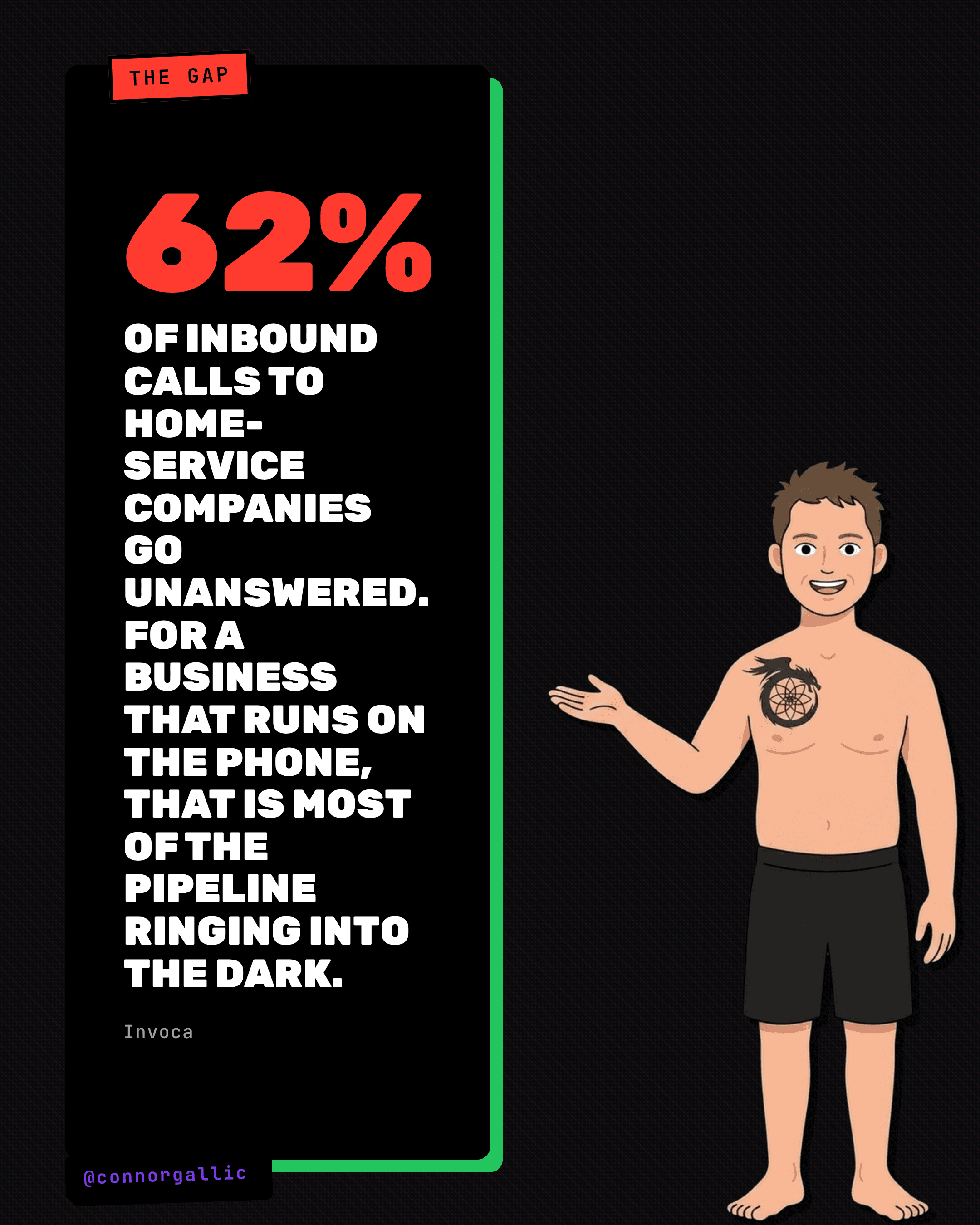
Invoca looked at home service companies and found they miss 62% of their inbound calls. Read that again. Not 6%. Sixty two percent. For a business that runs on the phone, that is not a rounding error. That is most of the pipeline ringing into the dark.
Here is the part nobody wants to sit with. A missed call is not a missed minute. It is a missed customer. The person calling a plumber at 7pm with a flooded basement is not leaving a voicemail and waiting until Tuesday for a callback. They are hanging up and dialing the next name on the list. The call you missed becomes your competitor's booked job.
So when I say voicemail is where revenue goes to die, I mean it literally. The voicemail box is a graveyard. Every blinking light is a customer who already moved on.
Why small businesses miss so many calls
Big companies have a front desk, a phone tree, and an overflow team. A one-person shop has none of that. The owner is under a sink, on a roof, in a chair with a patient, or driving between jobs. The phone rings and there is simply no free hand to answer it.
This is the cruel math of running lean. The leaner you run, the more calls you miss, and the calls you miss are the growth you needed to hire the help that would have answered them. You are stuck in the gap, and the gap costs you the exact thing that would close it.
Most owners patch this with the tools they already have. None of them actually fix it.
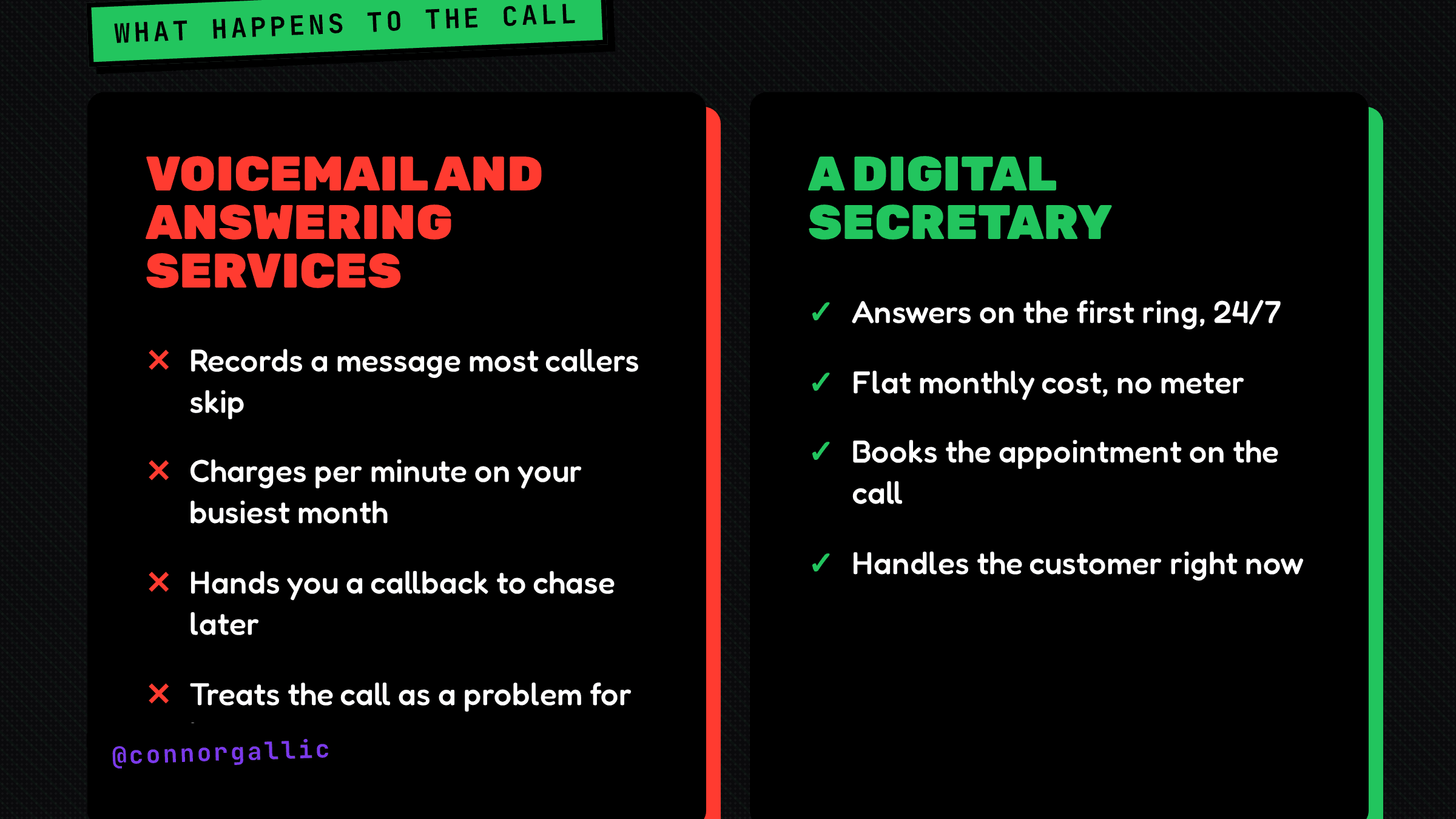
Every one of these treats the call as a message to deal with later. The customer does not want to be a message. They want their problem handled now.
What answering every call actually changes
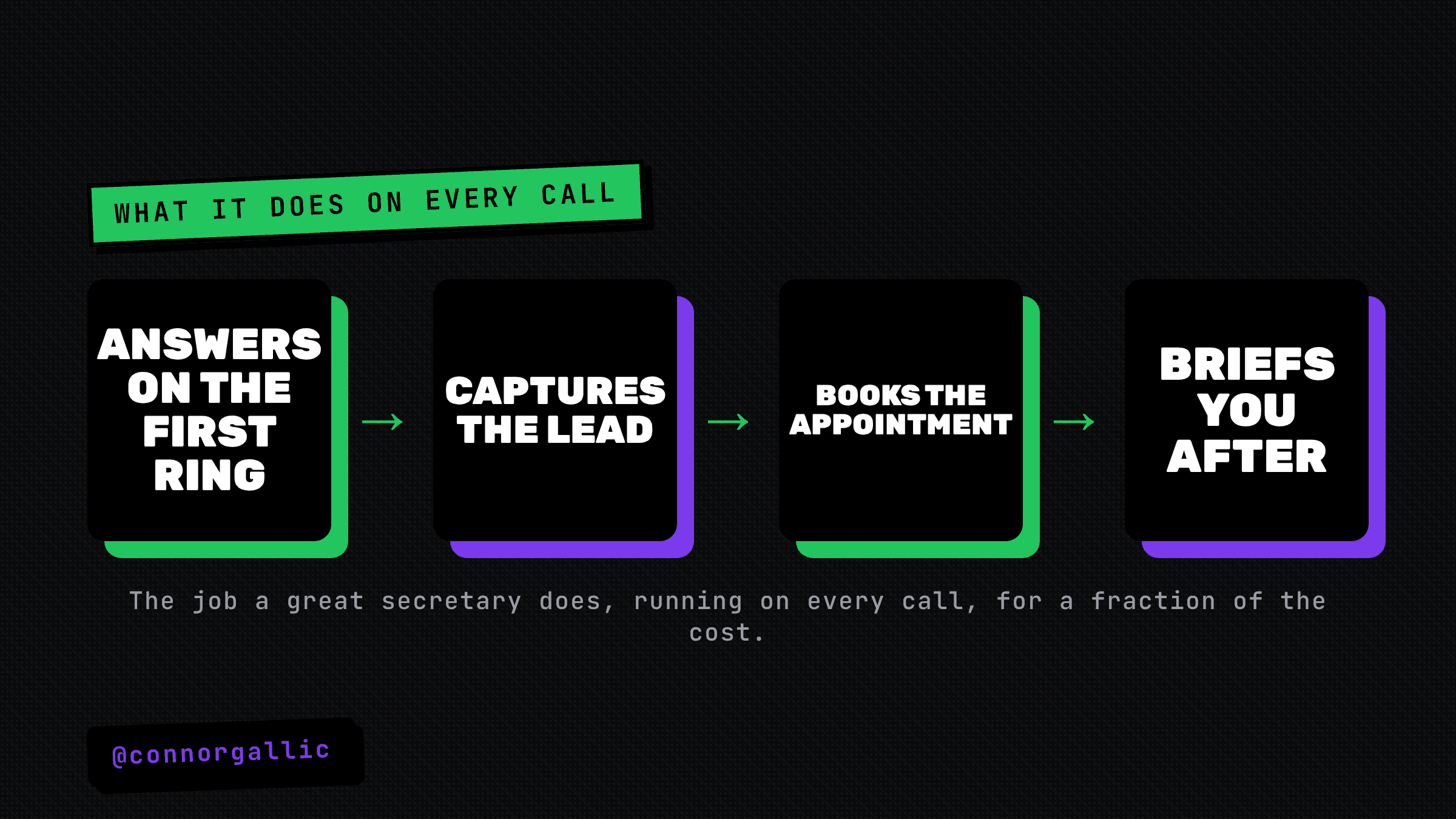
I build AI systems for a living, and the one that surprises people most is the simplest. It is a digital secretary that answers the phone. No app for the caller. No new number. It picks up your existing line on the first ring, every ring, at 2pm and 2am.
The after-hours call that used to hit voicemail now gets greeted, qualified, and booked onto your calendar before the caller hangs up. The call that came in while you were with a customer no longer competes for your attention. It runs in parallel. You are not adding hours. You are stopping the leak.
The number that matters is not call volume
People obsess over getting more calls. More ads, more leads, more top of funnel. Then they pour that traffic into a phone nobody answers 62% of the time. That is like turning the faucet up on a bucket with a hole in the bottom.
Fix the bucket first. If you answer every call instead of two out of five, you can triple your booked work without spending another dollar on getting the phone to ring. The cheapest growth you will ever buy is the growth you already paid for and let walk away.

This is not a future problem
The reason I keep coming back to that Invoca number is that it is not a prediction. It is happening on your line right now. Today, while you read this, more than half the people trying to give you money could not reach you.
I run more than a dozen products solo by refusing to do work that software can do better, and answering the phone is at the top of that list. KaiCalls is the digital secretary I built for exactly this gap. It answers, qualifies, and books, around the clock, so the call you used to miss becomes the customer you used to lose.
If you run a business that lives on the phone, go see how the AI receptionist works, then put it on your own line and watch what comes out of the graveyard.
Get the operator notes.
Real numbers, autonomous systems, and what breaks. For readers, not service buyers.